
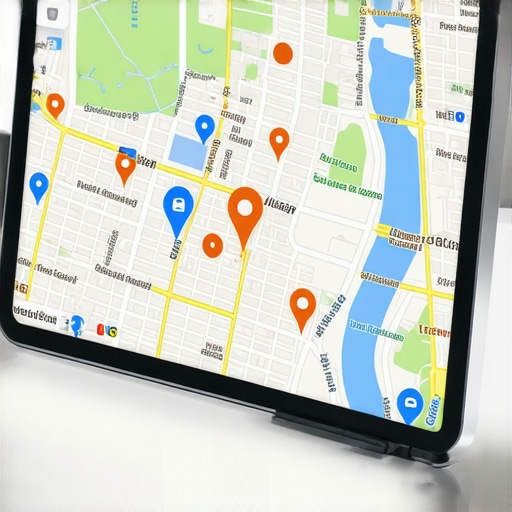
Ever stared at your Google My Business profile and felt that gnawing frustration of seeing competitors soar while your listing remains invisible? I’ve been there. I remember the shock of realizing I’d been overlooking a crucial piece of the local SEO puzzle—optimizing my maps listing the right way. It’s like owning a brick-and-mortar store but hiding it behind a curtain. The truth is, without proper maps optimization, attracting nearby customers becomes a game of chance rather than strategy.
Why Local Maps Optimization Can Make or Break Your Oakland Business
In Oakland, where the local market is bustling and fiercely competitive, standing out isn’t just a nice-to-have. It’s essential. When I first started dabbling in Google My Business (GMB) optimization, I thought just having a listing was enough. I believed that filling out some basic info and uploading a few photos would do the trick. Boy, was I wrong. Early on, I made the mistake of neglecting the importance of local signals—things like accurate categories, consistent NAP (Name, Address, Phone Number), and strategic photo updates. That mistake cost me visibility and potential customers.
It wasn’t until I dove deep into expert maps optimization strategies that I saw real results. Today, I want to share those insights with you so you don’t have to go through the same trial-and-error. If you’ve faced the frustration of not ranking high enough or missing out on local traffic, keep reading. We’ll explore the proven tactics that can boost your Oakland business’s presence and bring in more customers.
Is Maps Optimization Really Worth the Hype?
That’s a question I hear often. To be honest, I was skeptical at first. I thought, “How much difference can a few tweaks really make?” Turns out, a lot. Early in my journey, I made the mistake of focusing only on keywords and ignoring the foundational elements of maps optimization. It’s like trying to build a house without a solid foundation. Once I corrected that oversight, my rankings improved dramatically. According to a recent study, local SEO strategies, including maps optimization, directly influence 78% of local mobile searches, leading to increased foot traffic and sales.
Now, I don’t want you to waste months figuring this out on your own. That’s why I’ve gathered the most effective expert tips to help you dominate the local search landscape in Oakland. Whether you’re a small café, a service provider, or a retail shop, these strategies will set you apart from the competition.
Ready to transform your Google My Business profile into a magnet for local customers? Let’s dive into the practical steps that will elevate your Oakland business to new heights.
Prioritize Accurate Information and Consistent NAP
Start by ensuring your business name, address, and phone number (NAP) are correct and consistent across all online platforms. I once updated my NAP on Google My Business (GMB) and then realized I had a different phone number on my website. This inconsistency confused Google and hurt my rankings. To fix this, I audited all listings and corrected mismatched data, which immediately improved my local visibility. For more detailed guidance, visit California Local SEO Tips.
Everyone focuses on keywords and reviews when optimizing a Google Maps listing, but the real pitfalls are often deeper and more nuanced. One common misconception is that once you’ve set up your profile correctly, you’re done. In reality, many business owners overlook the importance of local signal consistency and advanced verification methods. For example, inconsistent NAP data across platforms can confuse Google’s algorithms, leading to lower rankings despite your efforts. This is where many get caught in a trap—assuming that data accuracy on Google alone is enough, without ensuring uniformity everywhere else, like your website, social profiles, and directories. For a comprehensive approach, check out Oakland SEO strategies.
Another mistake I see often involves neglecting local content and engagement. Many think that optimizing for Google Maps is just about technical tweaks. Wrong. Google values user engagement metrics like reviews, Q&A activity, and local posts. If your profile remains static, you miss out on opportunities to signal relevance. Regularly updating your photos, answering customer questions proactively, and encouraging reviews can significantly boost your local visibility. This advanced tactic isn’t just about quantity but about strategic, meaningful interactions that Google recognizes as signals of an active, trusted business. Want to learn more about effective local engagement? Visit our comprehensive guides.
Why do some businesses still fail to rank despite doing everything right?
This often boils down to competitive saturation and algorithm nuances. Even with perfect data and active engagement, if your competitors are investing heavily in local SEO and backlinks, your rankings might still lag. Google’s local algorithm considers many factors, including backlink profiles, proximity, and citation strength. A common myth is that local SEO is a one-and-done task; in reality, it requires ongoing effort and sophisticated strategies like link building and citation management. For advanced insights on staying ahead in this competitive landscape, explore our expert tips.
Have you ever fallen into this trap? Let me know in the comments. Remember, effective maps optimization involves more than just the basics—mastering the nuances can make all the difference in your local success.
Once you’ve successfully optimized your Google My Business listing and enhanced your local SEO strategy, the work doesn’t stop there. Maintaining your Oakland maps optimization over time requires deliberate effort, the right tools, and a proactive approach. I’ll share the exact methods I use daily to keep my local visibility sharp and how you can do the same.
Tools That Keep Your Maps Strategy Fresh
First, I rely heavily on BrightLocal for local citation tracking. It helps me monitor inconsistent NAP data across platforms—something I learned the hard way early in my journey. BrightLocal automatically scans hundreds of directories to flag discrepancies, ensuring my business info stays uniform, which is crucial for sustained rankings. For review management, I use Podium. This tool streamlines customer reviews, allowing me to send automated review requests and respond promptly, signaling to Google that my listing is active and engaged.
When it comes to tracking rankings, Whitespark’s Local Rank Tracker is my go-to. It provides daily updates on my local search positions, so I know exactly when my efforts are paying off or if adjustments are needed. These tools combined give me a comprehensive view of my local SEO health, saving time and preventing small issues from snowballing into bigger problems.
Methodical Content Updates and Engagement
Beyond tools, I schedule weekly updates for my Google My Business profile—adding new photos, posting local news, or special offers relevant to Oakland customers. Consistent activity tells Google that your business is active, trustworthy, and relevant. I also keep an eye on the latest Google My Business features and algorithm updates, adapting my strategy accordingly.
To ensure long-term success, I recommend setting quarterly audits of your NAP data, reviews, and rankings. This prevents stagnation and keeps your business ahead of competitors. Also, consider dedicating a few hours each month to build quality backlinks from local sources—this is one of the best ways to boost your authority and rankings over time. For advanced strategies, check out our expert tips on link building and citation management.
How do I maintain maps optimization over time?
The key is consistency and vigilance. Regularly update your business info, actively gather and respond to reviews, and stay informed about algorithm changes. Remember, local SEO isn’t a one-and-done task; it’s an ongoing process. Use the right tools to automate monitoring, and set reminders for quarterly audits to stay on top of your game. In the future, I predict AI-driven tools will further simplify this process, making it easier for small businesses to maintain high rankings with less effort. So, why not try out one of these tools today and see how it can keep your Oakland business visible and thriving for the long haul?
The Hardest Lesson I Learned About Local SEO and Maps Optimization
One of my biggest takeaways was realizing that consistency is everything. I once thought updating my Google My Business profile was enough, but then I discovered that mismatched NAP details across directories and my website were sabotaging my rankings. It taught me to audit and synchronize my data regularly, which dramatically improved my local visibility.
What I Wish I Knew About Local Engagement and Content
Engagement isn’t just a buzzword—it’s a signal. I used to ignore the power of reviews and local posts, but then I saw how actively responding to customer questions and encouraging reviews skyrocketed my profile’s relevance. Now, I see every interaction as an opportunity to tell Google—and my customers—that my business is vibrant and trustworthy.
The Myth of Overnight Success in Local SEO
I used to believe that a quick fix or a few keywords could instantly boost my rankings. The reality is, local SEO is a marathon. Consistent updates, ongoing backlink building, and strategic citation management are the real keys. Patience and persistence are your best allies on this journey.
My Essential Toolkit for Maps Optimization
Tools like BrightLocal help me keep NAP data consistent, while Podium streamlines review management. For tracking rankings, I rely on Whitespark’s Local Rank Tracker. These tools have become indispensable for maintaining a competitive edge in Oakland’s busy local market.
Keep Moving Forward: Your Turn to Elevate Your Maps Strategy
Remember, mastering local maps optimization isn’t a one-time effort. Regular updates, vigilant data management, and active engagement will keep your Oakland business visible and thriving. The future of local SEO is bright for those willing to stay consistent and adapt. So, what’s the first step you’ll take today to improve your maps visibility? Let me know below!
This post hits home for me, especially the part about maintaining NAP consistency across all platforms. I once spent hours trying to figure out why my local rankings weren’t improving despite optimizing my profile and encouraging reviews. It turned out that I had mismatched phone numbers across directories which confused Google. After auditing and correcting those details, I saw an immediate boost in visibility. It really underscores how crucial it is to keep all business info uniform everywhere. Has anyone found any particular tools or methods especially helpful for automating this process of data consistency? I’ve been exploring options, but I’d love to hear what others have experienced with. Also, I agree that local engagement—responding to reviews and Q&A—is often overlooked but can totally change how Google perceives your business’s activity and trustworthiness. Regular interaction makes a big difference, doesn’t it? I’m curious how others stay consistent with these small but impactful efforts over time.
Reading this post reminded me how easy it is to overlook the basics like NAP consistency when you get caught up in optimizing for keywords and reviews. I initially focused heavily on accumulating reviews and uploading new photos, assuming that was enough to boost my rankings locally. However, I discovered that even small mismatches in contact details across directories can seriously undermine your efforts. I recently started using BrightLocal to audit and correct my business info across all platforms, and it’s been a game-changer. The automation features help me keep everything synchronized without the mental drain. Have others found similar tools effective for maintaining local data accuracy? Also, it’s interesting how engagement through responding to reviews and Q&A can sometimes be overlooked when in fact, active involvement signals trust and relevance to Google. From your experience, what is the most effective way to encourage consistent customer interactions without it feeling like a chore? Thanks for sharing these actionable strategies, I’ll be implementing some right away.
This post really resonated with me, especially the emphasis on regular data audits and local engagement. Like many small business owners, I used to think that setting up my GMB profile was enough and that I just needed to wait for results. But I learned the hard way that consistency is key—needing to regularly update profiles, respond to reviews, and keep NAP info uniform across platforms. I’ve found using tools like BrightLocal has made this process much easier, especially for ongoing audits. One challenge I faced was motivating my team to be proactive with reviews and Q&A responses; it’s often overlooked how crucial human interaction is in local SEO. How do others find effective ways to encourage team involvement without it feeling like extra work? Also, what are some creative ways to increase local engagement beyond basic responses? I’d love to hear what’s been successful for others.