Why Your Oakland Map Pin Is Showing Up in the Wrong Neighborhood
I vividly remember the mornings when I would check my Google Business profile, only to see my Oakland map pin conspicuously dropped in the wrong neighborhood. It was frustrating—my potential customers searching for my services couldn’t find me, and I knew something was off. That lightbulb moment hit me hard: Your map pin’s location is more than just a dot on a map; it’s your digital storefront, and when it’s misplaced, business suffers.
Why Your Oakland Map Pin Keeps Showing Up in the Wrong Neighborhood
Navigating the complexities of local SEO, especially in a vibrant area like Oakland, can feel like trying to find your way through a maze. The truth is, even seasoned marketers stumble on this issue. Misplaced pins aren’t just an annoyance—they can directly impact foot traffic, online inquiries, and your bottom line. From my experience, the primary culprit often boils down to incorrect or outdated information in your Google Business Profile or inconsistent NAP (Name, Address, Phone number) data across platforms.
Interestingly, Google’s algorithms rely heavily on location signals to determine the relevance of your business in local searches. According to a recent study, over 60% of mobile users click on the first three results in local packs, which means a misplaced pin could mean the difference between a new customer and lost opportunity.:{“reference”:”https://oaklandseoservices.com/why-your-oakland-map-pin-is-vanishing-in-2026-4-fast-fixes”}
So, have you ever experienced that sinking feeling when your Oakland shop’s map pin isn’t where you know it should be? If so, you’re not alone. The good news? With a few strategic adjustments, you can get your pin back in the right neighborhood—and keep it there.
Before diving into the fixes, it’s essential to understand that the root causes are often closer than you think, stemming from things like map marker placement errors or conflicting data across directories. These seemingly small issues can snowball into significant visibility problems. The upcoming sections will walk you through practical, proven tactics to correct your map pin’s location—so stay tuned. For more comprehensive strategies, I recommend exploring how [maps optimization Oakland](https://oaklandseoservices.com/maps-optimization-oakland-boost-your-visibility-and-attract-more-customers) can transform your local visibility.
Pinpoint Your Map Failures
Start by reviewing your current Google Business Profile. Log into your account and verify that your address matches your physical location precisely. Cross-check that your business category and primary services align with what your customers search for. Discrepancies here often cause Google to misplace your pin. Additionally, examine other directories and online citations to ensure consistency, as conflicting information confuses Google’s algorithms and can lead to misplaced pins. Think of it like a GPS: the more landmarks and signals you have in sync, the more accurately Google can place your shop.
Update Your Map Marker with Precision
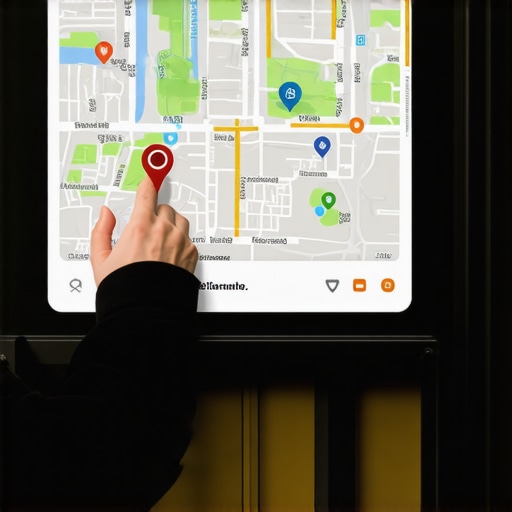
Next, access your Google Business Profile and navigate to the location section. Use the online map interface to drag the pin directly onto your storefront’s exact spot. Be meticulous—zoom in for granularity and match your pin to the physical door or signage. In cases where the map tool is unresponsive, or your address isn’t accurately pinpointed, consider submitting a correction through Google Maps. Remember, you’re instructing Google exactly where to place your digital storefront, much like pointing out a landmark on a tourist map. In my experience, taking the time to manually adjust the pin can dramatically improve your local pack rankings and visibility.
Leverage Local Signals for Accurate Placement
Physical photos of your shop’s facade serve as valuable verification signals for Google. Upload or update high-quality images that clearly show your storefront from multiple angles. This visual evidence aids Google’s AI in confirming your location and can be particularly effective if your map pin has been consistently misplaced despite updates. Think of it as providing Google with a visual confirmation, similar to how locals recognize each other’s shops by sight. For more advanced tactics, implementing local neighborhood signals—such as local landmarks or community events—can further boost your map’s accuracy in Oakland’s dynamic landscape. You can explore effective neighborhood signal strategies here.
Optimize Your Data Across Platforms
Inconsistent NAP data can cause Google to become confused about your true location. Audit your business listings across popular directories like Yelp, Bing, and Apple Maps, making sure your name, address, and phone number match exactly—down to abbreviations and formatting. Use tools or services that automate this process; even minor discrepancies can lead to your map pin sinking or drifting in local search results. Maintaining uniform data is akin to updating your address book—precise details ensure Google’s internal GPS keeps your pin accurately placed, boosting your presence in local searches.
Monitor and Adjust Based on Performance
After implementing these changes, keep track of your pin’s position and local search impressions over the next few weeks. Use Google’s local insights to see if your position improves or if further tweaks are needed. Sometimes, Google takes time to reindex your updates—patience coupled with persistent optimization yields the best results. Remember, local SEO in the Bay Area thrives on precision—think of it as fine-tuning a complex instrument where every string counts. For insights into maintaining your Oakland SEO, check out this comprehensive strategy guide.
Many local business owners believe that simply creating a Google Business Profile guarantees high visibility in Oakland’s competitive market. However, the reality is far more nuanced. A common myth is that optimized listings alone will propel your shop to the top of local searches. In truth, **advanced map optimization techniques** and understanding Google’s ever-evolving algorithms are crucial to truly dominating your neighborhood. For instance, many overlook the importance of **local signals** such as neighborhood landmarks or community events, which are now vital ranking factors in Oakland’s dynamic landscape. Relying solely on general SEO practices without tailoring strategies to Oakland’s unique environment can result in your map pin appearing in distant or irrelevant locations, costing you valuable leads. Additionally, several entrepreneurs fall into the trap of over-optimizing—stuffing keywords or flooding directories—which Google now penalizes in its latest AI-driven ranking systems. To truly excel, you need a holistic approach that combines **local citation accuracy**, **geo-specific content**, and **visual verification signals** like storefront photos. Moreover, many believe that once optimized, your position will automatically improve— but Google’s local algorithms are interactive and require ongoing adjustments based on performance data. Investing in **continuous monitoring and refinement** ensures your Oakland shop stays on top, rather than falling victim to algorithm shifts. For detailed insights, check out our comprehensive guide on [California local SEO strategies](https://oaklandseoservices.com/california-local-seo-how-oakland-businesses-can-rank-higher-in-local-searches), which emphasizes the importance of nuance in local search success. Remember, in the world of SEO, the devil is in the details. Are you accidentally ignoring some? Have you ever fallen into this trap? Let me know in the comments.Maintaining a strong presence in Oakland’s competitive local SEO landscape demands the right tools and ongoing efforts. One fundamental approach I recommend is leveraging a dedicated rank tracking platform like BrightLocal or Whitespark. Personally, I use BrightLocal because it provides precise insights into your map rankings across multiple locations in Oakland and the Bay Area, allowing me to monitor progress in real-time and adjust strategies accordingly. Regularly auditing your Google My Business profile with tools like Moz Local ensures your NAP consistency remains intact, preventing map pin misplacements that could hurt visibility.
How do I maintain my map optimization efforts over time?
Consistency is key; set a weekly review schedule to check your listings, update photos, and respond to reviews proactively. Additionally, integrating local citation management tools such as Yext or Synup helps keep your business information uniform across over 200 directories, safeguarding your local map ranking. As local search algorithms continue to evolve, staying ahead means adopting a holistic maintenance routine—combining analytics, citation audits, and content updates. Going forward, expect AI-driven tools to further personalize local search experiences, making real-time adjustments even more critical. To capitalize on these trends, I suggest trying out Google’s new Business Profile Manager, which allows you to automate certain updates and insights—streamlining your maintenance process. Incorporate these tools into your routine, and you’ll build resilient, long-term visibility that withstands algorithm shifts and scaling challenges in Oakland and beyond. For a tailored maintenance plan, consider consulting resources like [California local SEO](https://oaklandseoservices.com/california-local-seo-how-oakland-businesses-can-rank-higher-in-local-searches) to refine your approach and stay competitive in 2026.
Through my journey with local SEO in Oakland, I’ve discovered that the nuances of map pin placement go far beyond simple adjustments. One of the most valuable lessons I learned is that consistent, real-world verification—like regular storefront photos—can dramatically influence your map’s accuracy. It’s not just about technical tweaks; it’s about creating a tangible connection between your digital presence and your physical shop. Additionally, I realized that staying patient and monitoring your performance over weeks yields insights that quick fixes often miss. This ongoing vigilance is essential because Google’s algorithms continuously evolve, especially in dynamic markets like Oakland. Finally, embracing a holistic approach—integrating correct data, visual signals, and neighborhood cues—helps maintain a resilient local SEO strategy that thrives in 2026 and beyond.