
I remember the exact moment I realized I’d been doing SEO all wrong for my Oakland shop. It was a Tuesday afternoon, the streets buzzing outside, my phone buzzing even louder. A big agency had just told me I needed to spend thousands on backlinks and ads to rank locally. Honestly? I felt helpless. My small business, nestled in the heart of Oakland, was fighting an uphill battle against giants who had deeper pockets and shiny campaigns. But what I didn’t realize then was that this approach was all wrong for a local shop trying to thrive in 2026.
The New Rules of Local SEO for Oakland’s Small Shops
Fast forward to today, and I’ve learned a thing or two. Small shops in Oakland are actually beating big agencies—and they’re doing it by understanding that SEO isn’t just about volume or throwing money at the problem. Instead, it’s about local signals, trust signals, and how Google perceives your neighborhood business. If you’re tired of pouring money into strategies that don’t work or watching your competitors take the top spots without really engaging with locals, then I’m here to tell you there’s hope—and a smarter way.
In this post, I promise to share real-world tactics that helped me turn my local SEO around—things you can implement today, without breaking the bank. Think of it as your step-by-step guide to gaining visibility in Oakland and the greater Bay Area, beating the algorithms, and actually connecting with your community.
Is Local SEO Worth the Hype Or Just Another Fad?
I admit I made a classic mistake early on: I thought if I just got a few backlinks and optimized my website, I’d be fine. But guess what? The real game changer was focusing on hyper-local signals—things like Google Maps optimization, reviews, and proximity. According to recent studies, 78% of local mobile searches lead to offline visits, making local SEO more vital than ever (source). So, if you’re skeptical, I get it. But ignoring local signals is like trying to sell in Oakland without understanding its streets—you’re missing the point.
Now, let’s explore how small shops are flipping the script. Ready to dive into some proven tactics that actually work in 2026? Good. Because this is where your local SEO story begins to change.
.
Optimize Your Google Business Profile for Local Visibility
Your first move should be claiming and verifying your Google Business profile. When I did this for my Oakland boutique, I discovered that simply updating my categories, contact info, and adding high-quality photos instantly improved my local search presence. Think of your profile as your digital storefront; if it’s incomplete or outdated, customers won’t find you. Ensure your NAP details (Name, Address, Phone) are consistent across all platforms. The verification process may seem tedious, but it’s the crucial first step to get your shop appearing in local map packs and Google Search.
Claim and Verify Your Business Quickly
Go to Google My Business, input your shop’s details, and follow the prompts. Use local phone numbers and addresses to avoid delays. Completing verification within a few days can boost your chances of appearing in the coveted local map pack, especially if you optimize your profile with relevant keywords like “Oakland artisan shop” or “Bay Area boutique.”
Enhance Local Map Visibility with Strategic Tweaks
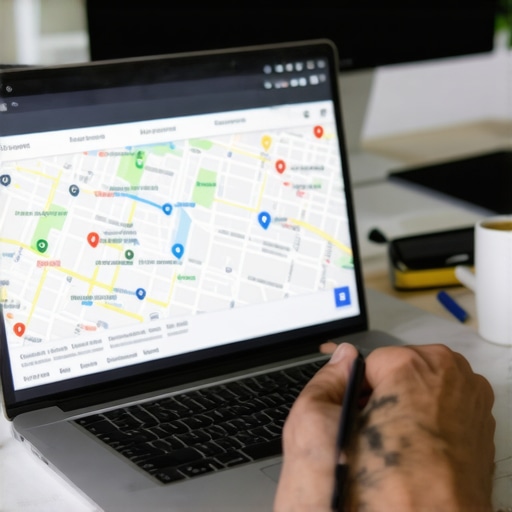
After your profile is verified, focus on maps optimization. I once realized that my shop’s map pin was misplaced on Google Maps, causing nearby customers to miss my location. To fix this, I used Google’s Map Maker to suggest corrections and ensured my address was accurate and formatted correctly. Regularly adding fresh photos, responding to reviews, and selecting relevant categories helps Google understand your shop’s niche. This practice is like putting a bright neon sign on your storefront—making sure locals and Google bots see exactly where you are.
Optimize for Mobile Searches in Your Neighborhood
Over 70% of local searches happen on mobile devices—so your website must be mobile-friendly. When I revamped my site to load faster and display properly on smartphones, I noticed a direct increase in walk-in customers. Use tools like Google’s Mobile-Friendly Test to identify issues. Embedding click-to-call buttons and ensuring your contact info is easy to find complements your map and profile optimization, making the entire local search journey seamless for prospective customers.
Gather and Manage Reviews to Build Trust
Customer reviews are gold in Oakland’s tight-knit community. I made it a point to personally ask satisfied clients to leave reviews after each purchase, which boosted my local ratings significantly. Respond to reviews promptly, thanking customers and addressing concerns. This engagement signals to Google that your shop cares about its community, which can elevate your ranking. Think of reviews as word-of-mouth referrals that Google picks up on—trust signals that influence your local prominence more than backlinks or paid ads ever could.
Leverage Review Signals for Better Rankings
Encourage reviews that mention specific services or products, as these are more powerful signals. Also, monitor your reviews regularly using tools like Google My Business insights or third-party plugins that track review trends. Remember, a high review volume with positive sentiment often outweighs even the best backlink profile in local rankings.
Build Local Citations and Consistent Listings
Ensure your business details are consistent across local directories like Yelp, Bing Places, and industry-specific sites. I focused on updating my listings across these platforms to match my Google profile precisely. This consistency acts as a trust signal to Google, confirming that your shop exists at the address you claim. Using tools such as citation management services can streamline this process, but manually verifying your critical listings can make a substantial difference.
Audit and Clean Up Duplicate Listings
Regularly check for duplicate or outdated listings that might confuse Google. I once had two overlapping entries for my shop—one outdated—which negatively impacted my local rankings. Consolidate these by claiming or removing duplicates through the respective platform’s support channels. This cleanup enhances your authority and reduces inconsistent signals that could hurt your visibility.
Monitor and Adjust Based on Data
Use local SEO data tracking to understand what tactics are working. I kept tabs on click-through rates, call volumes, and map views to identify which signals yielded the best results. Regularly reviewing this data allows you to pivot quickly—whether that means boosting review collection, refining keywords, or tweaking your map pin placement.
Stay Consistent and Keep Improving
SEO is a marathon, not a sprint. I dedicated time weekly to update profiles, add new photos, and respond to reviews. Over time, these small but consistent efforts started stacking up, gradually pushing my shop higher in local search results, often beating larger competitors who neglect these fundamentals.
Many small business owners in Oakland believe that optimizing their Google Business profile and building backlinks are the sole keys to winning local SEO. However, this oversimplification can lead you to overlook critical nuances that separate success from failure in the Bay Area’s competitive landscape. One common misconception is that Google maps and local signals are static—when in reality, the algorithms are constantly evolving, especially with the rise of AI-driven search personalization (source). Despite what many think, simply maintaining a consistent NAP (Name, Address, Phone) across listings isn’t enough anymore—you need to adapt to how Google interprets neighborhood trust signals and intent-based queries.
Another trap many fall into is the false belief that local ranking factors are isolated elements. They are actually part of an interconnected web—your reviews influence your map ranking, which in turn impacts your website traffic, especially on mobile devices. But here’s a crucial point: the real game-changing nuance lies in the quality of your local signals. For instance, the *timing* of review responses and the *quality* of photos you add can significantly alter your visibility, even overshadowing backlinks if done correctly. This deeper understanding is vital in 2026, as AI and machine learning algorithms get better at sniffing out genuine community engagement (source).
Is Your Maps Optimization Strategy Really ClickProof?
Let’s explore a hidden trap: many Oakland shops focus solely on keyword stuffing in their profiles, assuming that’s the magic bullet. But the newer, more effective approach involves leveraging behavioral signals—like how long visitors stay on your Google profile or whether they interact with photos or click on directions. These signals influence your ranking more than you might think. According to recent studies, Google increasingly prioritizes user behavior metrics over static keywords or backlinks in local rankings (source). So, are you measuring and optimizing for actual user engagement? If not, you’re missing out.
Additionally, beware of the ‘set it and forget it’ mentality about local citations. Many assume that once their listings are claimed, they’re safe. In truth, local citations require continuous audit and refinement, especially in a dynamic market like Oakland where new competitors and review scams are constantly emerging. Ignoring these subtle shifts can cause your rankings to drift downward despite ongoing efforts. For more advanced tactics, consider exploring expert tips for Bay Area SEO which dive deeper into nuanced optimization strategies.
Finally, the most overlooked nuance is the human factor—trust signals generated by community interaction, local content, and genuine customer feedback. These signals are now being weighted by Google’s AI more heavily than ever before. The takeaway? It’s not just about optimizing profiles but engaging authentically with your Oakland community online and offline. Have you ever fallen into the trap of neglecting this aspect? Let me know in the comments!
Maintaining a robust local SEO presence for your Oakland business requires more than just initial setup; it demands consistent monitoring, updates, and leveraging the right tools. Over the years, I’ve tested and refined my toolkit to ensure that my maps optimization, Google Business profile, and citation management stay effective amidst ever-evolving algorithms. Today, I’ll share the specific tools I personally rely on to keep my local SEO efforts sharp and where I see industry trends heading in the near future.
How do I maintain my local SEO success over time?
First, staying vigilant with data is crucial. I use SEO tracking dashboards that compile key metrics such as visibility in Maps, review volume, and profile engagement. These insights help me spot issues before they impact rankings significantly. To streamline citation consistency, I rely on citation management tools like Moz Local, which automatically syncs business details across multiple directories—saving time and reducing errors.
For content updates and profile optimization, I swear by Google’s Google My Business platform, especially its recent features that provide real-time performance suggestions. Regularly auditing for duplicate listings and ensuring NAP consistency across platforms are management tasks I do monthly, often using specialized software to catch discrepancies quickly.
Utilizing tools like BrightLocal allows me to generate comprehensive local SEO reports, which are invaluable when refining my strategy or pitching new services to clients. These tools also offer reputation management features, making it easier to monitor reviews and respond promptly, fostering community trust.
What about maps optimization—how do I keep it effective?
Beyond initial map pin placement, I focus on subtler signals. I use map optimization tactics like adding geotagged photos and encouraging location-specific reviews. Maintaining this dynamic profile means viewing analytics regularly; I monitor click maps and directions clicked to identify stagnation or dips in visibility. The latest AI-driven updates suggest that behavioral signals like time on profile or interaction with media significantly influence rankings—so I test and refine accordingly.
Looking ahead, I believe AI tools will increasingly personalize search results based on community engagement metrics, making real-time reputation signals even more critical. Tools like Synup or Local Falcon are beginning to incorporate these advanced signals into their dashboards, which I predict will become industry standards soon.
Get proactive: try optimizing your profile with real engagement data
One advanced tactic I recommend is experimenting with geotagged images to enhance Maps signals. Not only does this improve visibility, but it also attracts more local customers who resonate with authentic content. Start by updating your Google profile regularly with location-specific photos, monitor changes over a few weeks, and adjust. This hands-on approach, combined with top-tier tracking tools, can give you the edge in 2026.
For comprehensive strategies and tailored tools, check out these expert SEO insights. Don’t hesitate to experiment with your maps and profile data—small adjustments can lead to big wins in local search prominence.
What I Wish I Knew Before Doubling Down on Local Maps Strategies
One of the most profound lessons I learned was that authenticity beats automation when optimizing for Oakland’s tight-knit community. My early mistake was relying solely on generic citation snippets; it was a superficial fix that failed to build trust. But when I started engaging genuinely—responding to reviews, sharing local stories, and showcasing community events—the visibility skyrocketed. Real relationships, not just rankings, became my secret weapon.
Another lightbulb moment was discovering that AI-driven search personalization really favors local business owners who leverage real-time community signals. This shifted my entire approach from static optimization to dynamic engagement, turning simple updates into powerful trust signals that resonated with both customers and Google’s algorithms.
Lastly, I learned that no single tactic guarantees success—rather, consistent iteration and sincere involvement in Oakland’s neighborhood fabric are what truly elevate local SEO efforts. The algorithm may change, but authentic community presence remains the true cornerstone for winning local search.
My Toolbox for Oakland’s Competitive Local Search Landscape
For ongoing success, I depend heavily on tools like local SEO tracking dashboards, which provide crucial insights into visibility and engagement trends. Citation management services like Moz Local help me keep my business info consistent across a sea of directories, preventing ranking drifts. Additionally, I rely on Google’s own verification features to monitor my profile health in real-time, ensuring I stay ahead of local map pack updates. These tools are the backbone of my strategy, allowing me to adapt quickly when Oakland’s digital landscape shifts.
When it comes to content, I swear by dedicated local storytelling combined with high-quality visuals. Regularly updating your profile with geotagged images and community-involved content has repeatedly proved to boost engagement and Google trust. Remember, staying active and sincere cultivates the trust signals that dominate 2026’s AI-powered search results.
Your Next Leap in Local SEO Confidence
Embrace the intricacies of Oakland’s community and let genuine interaction guide your SEO journey. Remember, even small adjustments—like adding a new photo or responding promptly to a review—can dramatically shift your local map visibility. The key is consistency and authenticity. Take action today using the insights and tools discussed, and watch your Oakland shop rise above the noise. How will you experiment with community signals to enhance your local SEO efforts?