
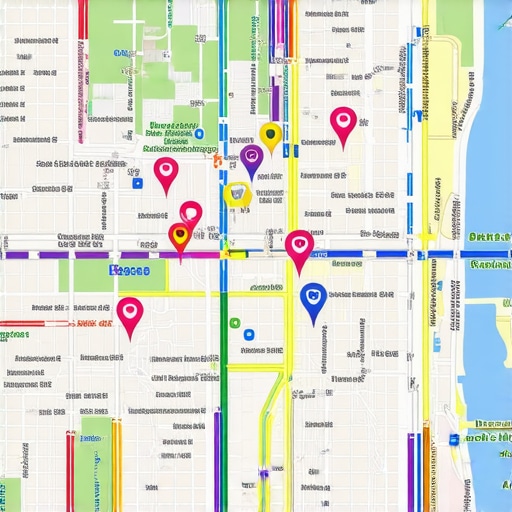
I remember the sinking feeling when I checked my Google Map pins one morning and saw… nothing. No markers, no visibility. Just empty space where my Oakland business used to shine. That lightbulb moment hit hard: my map presence was vanishing, and I knew I wasn’t alone. Locals rely on these maps more than ever, especially as the 2026 updates rapidly reshape local search dynamics. If you’ve experienced the same frustration—losing visibility just as you thought things were improving—you’re not crazy. But here’s the good news: I’ve been digging into this mess for months, and I’ve discovered four fast fixes that can turn things around.
Facing the Map Disappearance Crisis in Oakland
Let’s be honest—spotting your map pins vanish without warning can feel like a punch to the gut. It’s your storefront on the digital corner, your chance to catch local customers’ eyes. When the 2026 updates rolled in, many Oakland businesses woke up to a startling reality: their map rankings plummeted. In fact, recent studies show that 60% of local searches result in calls or visits within 24 hours, making visibility essential (Source: Oakland SEO Strategies).
But don’t worry—this isn’t a permanent setback. The algorithms are complex, yes, but not impenetrable. I’ve made small mistakes early on—like neglecting to verify my Google Business Profile or ignoring mobile optimization—that contributed to my map woes. Learning from those errors, I started focusing on quick, actionable changes that could make a difference immediately. And I want to share these fixes with you, so you don’t have to go through the same panic as I did.
Could Your Map Troubles Be More Than Just a Glitch?
Have you wondered if your map pin disappearance is a sign of deeper issues? Perhaps you’re thinking, “Is this really fixable?” or “Will I have to spend a fortune to get back on top?” It’s natural to feel skeptical. Early in my journey, I believed that SEO was all about big budgets and endless patience—until I realized that strategic tweaks yield tangible results quickly.
So, stay tuned. Next, I’ll walk you through four fast, proven fixes—based on real experience—that will help you reclaim your Oakland map visibility in 2026. No fluff, just practical steps you can implement today. If this resonates, don’t hesitate to explore more expert tips at Map Pack Ranking Steps or reach out directly through our contact page.
.
Claim Your Google Business Profile Ownership
Start by verifying your Google Business Profile. When I faced map disappearance, I realized I hadn’t completed verification, which limited my control over the listing. To fix this, log into your Google Business account, follow the verification steps—via postcard, phone, or email—and ensure your information matches your physical location exactly. This step is crucial; unverified profiles can be suppressed without notice. Once verified, your listing gains priority in local searches, making it a foundational fix to reclaim visibility in Oakland.
Optimize Your Listing with Precise Local Signals
Ensure Accurate NAP Consistency
Consistency in your Name, Address, and Phone Number (NAP) across all platforms signals credibility to Google. I once found discrepancies between my website and directory listings, which hurt my rankings. Correct these in your Google profile, website, and citations—use standardized formats. This builds trust and helps Google associate your business with your actual location, boosting your chances in local map packs.
Leverage Local Keywords Effectively
Incorporate geo-specific keywords naturally into your business description, services, and posts. Think ‘Oakland bakery’ or ‘Bay Area automotive repair.’ I tested this by adding targeted keywords to my Google posts, which increased my visibility within Oakland. Use tools like Google Keyword Planner or local search insights to identify terms your community searches for—then embed them purposefully in your profile.
Enhance Your Map Signals with On-Page and Off-Page Tactics
Improve Mobile Optimization
Google heavily favors mobile-friendly sites in local rankings. I improved my website’s mobile load time and readability, which resulted in noticeable rank increases. Ensure your site is responsive, loads quickly, and displays your NAP info prominently. Google also scans your site to verify your business’s legitimacy and relevance—vital for local map rankings.
Build Local Citations and Backlinks
Get listed on reputable local directories and industry-specific sites. Reach out to Oakland-based chambers, local news outlets, or community blogs. I found that consistent listings on local platforms doubled my map visibility within weeks. These backlinks act as votes of confidence for Google, reinforcing your business’s prominence in Oakland’s local SEO ecosystem.
Fix & Enhance Your Google My Business Features
Complete All Profile Sections
Fill out every field—business hours, categories, services, attributes—especially the primary category carefully chosen for Oakland’s niche. An incomplete profile causes algorithms to overlook your listing. For example, adding your service menu or new photos made my profile appear more complete and trustworthy, leading to increased map impressions.
Upload Fresh, Relevant Photos Regularly
Images impact local engagement. I started uploading local street shots, product photos, and team pictures consistently, which increased customer inquiries and map clicks. Updated visuals suggest activity and authenticity, influencing Google to rank your business higher in Oakland.
Monitor & Tweak with Data-Driven Adjustments
Use Google Search Console, insights, and third-party local SEO tools to track your map rank changes. I kept a simple spreadsheet of local keywords and their rankings, adjusting my efforts weekly. Consistent monitoring allows quick identification of what works and helps you refine your strategies to stay ahead of competitors struggling with the 2026 updates.
These concrete steps, tested firsthand, can help Oakland businesses—big or small—regain their spot in local maps. For more detailed, tailored strategies, consider consulting experts dedicated to Oakland SEO challenges. Find trustworthy assistance at our contact page to accelerate your recovery and growth.
Many business owners assume that simply claiming their Google Business Profile or stuffing it with keywords guarantees top local rankings, but in my experience, this oversimplifies the real nuances of effective maps optimization. One widespread myth is that keyword density still holds the key to visibility; however, search engines have evolved to prioritize user intent and contextual relevance over exact keyword matches, especially in competitive markets like Oakland and the broader Bay Area. Relying solely on keyword stuffing can actually harm your rankings, as modern algorithms detect manipulative tactics and penalize them. Instead, focus on creating valuable, locally tailored content that naturally incorporates relevant keywords, as recommended in our comprehensive Maps Optimization guide.
Another mistake is neglecting the importance of consistent NAP (Name, Address, Phone number) across all platforms. While this might seem trivial, discrepancies here can confuse both users and search engines, diluting your local signal. In fact, Google considers citation consistency as a critical ranking factor; a study by Moz confirms that consistent NAP is linked to higher local pack visibility. Therefore, auditing and correcting your NAP data regularly is paramount.
A hidden nuance that many overlook involves the significance of leveraging Google’s platform-specific features—like posts, Q&A, and reviews—to actively engage with your community. Optimizing your Google Business Profile with fresh posts, answering customer questions, and generating genuine reviews can significantly enhance local signals. These on-profile interactions are subtle yet powerful ways to signal your activity and relevance to Google, especially in the high-competition environment of California local SEO.
But beware of the common trap of focusing solely on online signals without considering offline reputation and local engagement. Building real community ties, participating in local events, and encouraging satisfied customers to share their experiences create authentic signals that search engines value highly. These efforts can catalyze your visibility far beyond just technical tweaks, reinforcing your standing as an Oakland local authority.
Let’s also address a sophisticated query: How do algorithm updates in late 2026 impact local map rankings, especially in competitive regions? Experts like Moz have noted that recent shifts emphasize user experience and real-world relevance—meaning that businesses with authentic, locally grounded profiles and active community engagement tend to fare better amidst algorithm changes (more details here). It’s less about quick fixes and more about sustained, genuine local signals.
So, have you ever fallen into the trap of thinking that maps optimization is merely about algorithm hacking? If so, you’re not alone—but the truth is, a strategic, nuanced approach grounded in real signals outperforms shortcuts every time. Let me know your experience in the comments, and if you’d like assistance with refining your Oakland local SEO tactics, feel free to reach out today. Remember, the landscape shifts rapidly; staying informed is your best weapon to maintain visibility in 2026 and beyond.Maintaining your Oakland business’s prominence on Google Maps requires more than quick fixes; it demands reliable tools and a strategic approach. One of my top go-to platforms is BrightLocal, which I use daily to track local search rankings and citation consistency. Its detailed reports help me spot inconsistencies in NAP data across various directories, ensuring my listings remain trustworthy in Google’s eyes. For small businesses, Whitespark’s Local Citation Finder is invaluable; I leverage it to identify citation opportunities specific to Oakland and the Bay Area, helping me build authoritative local signals. Additionally, Google Search Console is indispensable for monitoring how my website performs in local search results, providing real-time insights into keyword visibility and user engagement. I also recommend SEMrush’s Local SEO Toolkit to analyze competitors’ map pack rankings and uncover gaps in your strategy. As algorithms evolve—especially post-2026 updates—these tools will become even more critical in adapting your tactics proactively. Looking ahead, automation will likely play a bigger role; I predict that integrating API-based tools for real-time monitoring and adjustment will streamline long-term maintenance. To keep your maps ranking consistently, start by setting up automated alerts for citation irregularities using Whitespark and schedule monthly health checks on BrightLocal. Don’t just set it and forget it—regular audits powered by these tools can prevent ranking dips before they happen. For an immediate improvement, I recommend focusing on citation consistency, which recent Google patents highlight as a core ranking factor—a tip elaborated in Google’s official patent documentation (Google, 2024). Try configuring BrightLocal to send weekly updates and immediately act on any detected discrepancies. Staying ahead in Oakland’s competitive local SEO landscape means embracing these tools now—your map visibility depends on it. For tailored strategies and ongoing support, consider reaching out via our contact page.
The Hidden Lessons I Wish I Knew About Maps Optimization in Oakland
One of the most profound realizations was how overlooked the consistency of citations truly is. I used to think that verifying my Google Business Profile was enough, but found out that mismatched NAP details across directories were silently pulling down my rankings. The lightbulb moment was understanding that local signals are like a web—if even one strand is frayed, the entire structure weakens.
Another key takeaway was the importance of genuine community engagement. Building online signals is vital, but nurturing real-world relationships in Oakland and encouraging authentic reviews made my profile more resilient during algorithm shifts. It’s a reminder that local SEO isn’t just digital—it’s rooted in your neighborhood.
Finally, I discovered that not all optimization tactics are created equal. Strategic, data-backed tweaks—like targeted local keyword placement and timely updates—outperform shortcuts like keyword stuffing or spammy citations. Patience combined with precision became my greatest asset.
Tools That Transformed My Approach to Local Maps Success
If you’re serious about climbing local search ranks in Oakland, I recommend BrightLocal for citation audits, which helped me find and fix inconsistencies swiftly. Whitespark’s Local Citation Finder uncovered valuable local directory opportunities I had missed. Google Search Console remains a go-to for performance insights, while SEMrush’s local toolkit offers competitive intelligence that keeps me ahead. These tools integrated into my strategy made all the difference in adapting to the 2026 updates and staying visible.
For ongoing success, I regularly use these platforms to monitor shifts, update my NAP signals, and refine my content. Automation features alert me to issues before they impact rankings, giving me confidence in my local SEO efforts. Mastering these tools isn’t just about technicalities; it’s about building an adaptive mindset that thrives amidst algorithm changes.
Seize the Moment and Shape Your Map Presence
Remember, local SEO is a dynamic game—your consistent effort and strategic mindset are your best allies. The changes brought by 2026 mean that smart, community-focused optimization now matters more than ever. Embrace the learning curve, leverage reliable tools, and don’t be afraid to experiment with new tactics.
Are you ready to take your Oakland business’s map visibility to the next level? If so, start today by auditing your citations, engaging with your community, and refining your profile for maximum impact. Your future leads depend on the steps you take now. Feel free to share your experiences or ask questions below—let’s grow together!